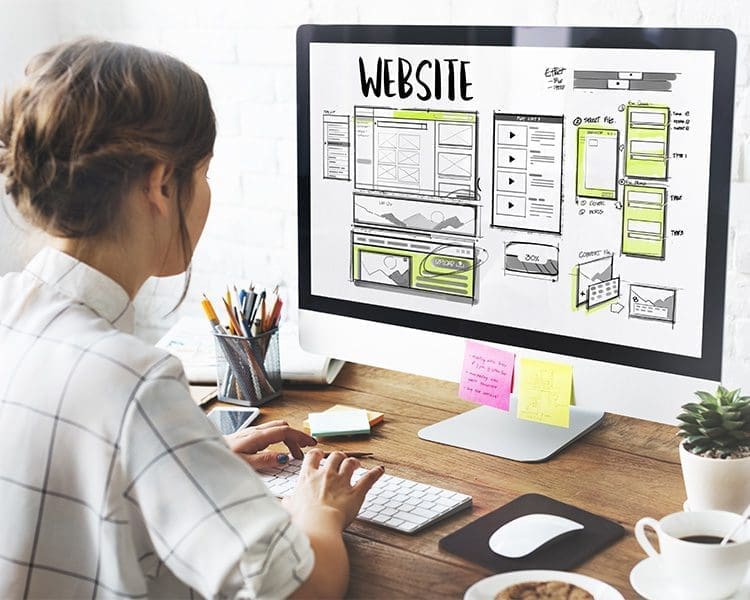

Choosing who you partner with to build your website is one of the most important marketing decisions you will make. A good website should bring in leads, support your business goals and grow with you over time. Yet many people end up disappointed because they did not know what questions to ask when hiring a web designer or an agency.
After years of helping clients fix poor websites, they don’t realise they only rent their website, have poor visibility on Google and confusing setups, here is the guide I wish every business owner had before starting a web project.
These insights come directly from real conversations, real audits and real situations with clients who came to us frustrated and wasted money.
1. Why choosing the right web partner matters
Your website has one job. Bring in leads.
Yet so many business owners end up with a site that looks fine but delivers nothing. It sits online like a digital brochure. No traffic, no enquiries and no visibility on Google or more recently, the AI tools.
This usually happens because the person who built it focused on aesthetics, not strategy. A good website needs both.
2. Should you work with a freelancer or an agency
There are brilliant freelancers and brilliant agencies. Both can work well. The key is knowing what each one offers.
Many people who come to us after using a one person setup have the same issues:
• a basic brochure site
• no SEO
• poor technical setup
• no long term support
• no measurable results
An agency usually brings a team of specialists. Someone doing design, someone doing SEO, someone writing content and someone providing support.
Questions to ask:
Who actually builds the site ?
Who writes the content ?
Who handles SEO ?
Is anything outsourced ?
What happens if something breaks ?
3. What platform do they build on and do you own it
A lot of clients do not understand the differences between WordPress, Wix, Squarespace and IONOS style builders. DIY platforms look simple, but they have limitations:
• poor SEO control
• limited customisation
• no true ownership
• restricted growth
• slow technical performance
A properly built WordPress website gives you full control, scalability and long term flexibility. But even WordPress needs best practice or it will not perform.
Many clients only learn this after spending money twice.
4. Do they understand copywriting and SEO
A website without clear messaging is decoration.
A website without Search Engine Optimisation is invisible.
Most clients who come to us have no idea what SEO is because no one ever explained it. They just know they have no leads.
Ask your designer or agency:
Do you write the content ?
Do you use AI and who edits it ?
Do you research search terms ?
Do you structure content for Google and AI search tools ?
If the answer focuses on tech and plugins rather than strategy, that is a red flag.
5. Look at case studies and reviews, not just a portfolio
A portfolio only shows the polished highlights. Anyone can show a nice homepage. What matters is whether the websites they build actually perform.
Instead of judging by screenshots, look for:
• real case studies with outcomes
• before and after stories
• Google Analytics or Search Console improvements
• ranking gains
• conversion increases
• long term client relationships
• independent reviews on Google
This tells you far more about an agency’s capability than a pretty mockup.
6. Think about ROI and the value of a conversion
People often ask how much a website costs, but the real question is what that website will produce.
A website is not a cost. It is an asset.
The right website should:
• increase enquiries
• improve lead quality
• reduce friction for customers
• support your sales process
• make paid traffic more profitable
• help you rank in your area
• improve trust and credibility
• contribute to long term growth
If a single customer is worth £500, £2,000 or £20,000 to your business, then the value of a high performing website is clear.
This is why focusing on price alone is a trap.
ROI and Customer Lifetime Value tell the true story.
A strong website pays for itself many times over.
A cheap website costs you opportunities every month.
7. What real SEO actually looks like
Many clients come to us saying they paid for SEO for a year and saw nothing. No keyword movement, no reports, no changes, no strategy.
Often the SEO they paid for was:
• a plugin installation
• a blog post with no purpose
• nothing at all
Real SEO is structured, measured and aligned with business goals. You should always be able to see what was done and why. If you cannot, the work probably did not happen.
There are approx 200 ranking factors and these change. An SEO has to keep up with all the latest algorithm changes and the industry movements.
8. Ask how they optimise for conversions
Pretty websites do not always convert.
Most poor performing sites share the same problems:
• no clear call to action
• confusing navigation
• forms buried too deep
• weak headlines
• unclear messaging
• no logical user journey
Conversion optimisation is a skill. When done well, it can completely transform results by guiding visitors towards the action you want them to take.
9. Check whether your website is ready for Google Ads
I often see people running Google Ads to a weak website. They spend hundreds or thousands sending traffic to a page that cannot convert.
If the website is unclear, slow or not trustworthy, ads will not fix it.
Fix the website first. Ideally include a strong SEO foundation.
Then layer in Google Ads.
10. Be realistic about DIY
DIY platforms make it look easy, but clients tell us the same thing every time.
They tried.
They got stressed.
They ran out of time.
And the website never looked or worked how they imagined.
DIY sites usually fail because there is no:
• strategy
• keyword research
• technical setup
• content structure
*Poor design
• conversion flow
People focus on getting something online instead of building something effective. It is also important to note that a DIY option is a good choice when you’re a start up and there is no budget yet to invest.
11. Understand how much work goes into a professional website
From the outside, it looks like a few pages and some pictures. Behind the scenes it involves:
• planning and wireframing
• copywriting
• keyword to page planning
• design
• development
• speed optimisation
• mobile layout
• Technical seo
• testing
• conversion tracking setup
• integration with CRM or booking tools
• performance checks
This is why professional websites cost more and perform better.
12. Ask about ongoing support and maintenance
A website is never finished. ( yes for us too, groan !)
It needs continuous updates and care.
Without a website care plan or SEO plan, performance will decline over time.
Security updates
Plugin changes
Google updates
AI search changes
Tracking adjustments
Content refreshes
This is how websites stay healthy and visible.
13. Ask how they stay up to date
I personally invest heavily in training, coaching and professional development.
• Agency Mavericks
• Dedicated SEO coaching
• The best tools
The digital world changes constantly. You want someone who stays ahead so your business stays ahead.
14. Understand the common misunderstandings
Here are the patterns we see all the time:
• people do not understand platforms
• they do not know what SEO is
• they do not understand conversions
• they believe a website is one and done
• they do not know what things cost
• they think Google Ads will fix everything
• they assume poor results are their fault
• they feel embarrassed for not knowing, even though no one ever taught them
Your job is not to know everything. Your job is to choose someone who explains things clearly.
15. How to use these questions when choosing a designer or website agency
Use this list in your next call. Good professionals will answer openly and clearly. Poor ones will avoid detail, hide behind jargon or give vague answers.
A great web partner should make you feel informed and confident, not confused or rushed.
16. Final thoughts
A website is not a commodity. It is a marketing asset that should support your business every day. When it is done properly, it becomes one of the most valuable tools you have. When it is done poorly, it becomes a constant source of frustration.
You do not need to become a web expert.
You just need to ask the right questions.
If you want honest guidance or want to explore a new website project, we are always happy to help.