

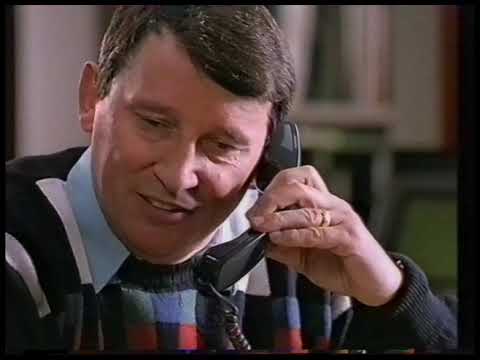
J.R. Hartley found his book. Can your customers find you?
TLDR: The principle of advertising has never changed. Only the platforms have. From Yellow Pages display ads to digital campaigns, businesses have always paid to be found. This piece looks at sixty years of advertising history, what it cost, why digital is actually the safer bet, and what it all means for your business today.

Do you remember the Yellow Pages?
That big, heavy, yellow book that thudded onto the doormat once a year. The one with the iconic “walking fingers” logo and the tagline that became part of British culture: Let your fingers do the walking.
If you ran a business in Cheshire in the seventies, eighties, or nineties, you didn’t question whether to advertise in it. You just did. If you weren’t in the book, you didn’t exist.
Fast forward to 2026. The book is gone, its last edition delivered in January 2019 after 53 years. But something has shifted in how businesses think about advertising. Back then, the options were clear, the pricing was set, and you paid it. You crossed your fingers and hoped it worked, because there was no way of knowing either way.
Today, a business can buy a website for five hundred pounds or fifty thousand. It can spend five hundred pounds a month on digital advertising or five thousand. And without understanding what sits behind those numbers, how is any business owner supposed to know what they’re actually getting?
The confusion is real. But here’s the thing: digital advertising, done properly and with the right people, is actually a far safer investment than a Yellow Pages ad ever was. Because this time, you can see exactly what your money is doing.

The Yellow Pages: A Brief History
The Yellow Pages was born in Brighton in 1966, the same year England won the World Cup. Produced by the General Post Office, it was the first directory to list businesses by category rather than alphabetically.
It grew quickly:
1973: Expanded nationally
1984: Became part of British Telecom, with over 70 local editions across the UK
1983: The J.R. Hartley advert aired and became the most remembered TV ad of the decade
1996: Went online for the first time — the first sign the tide was turning
1998: Still dominant, but Google had just launched
2017: Yell announced the printed edition would cease
2019: The final 23 million copies were delivered, last of all in Brighton, where it all began
What Did Advertising Actually Cost in 1980 ?
Here’s where it gets interesting. Business owners who resist spending on digital marketing today would almost certainly have spent on Yellow Pages without a second thought.
Yellow Pages annual costs:
- Basic small box listing: around £150 per year
- Display ad (logo, services listed, border to stand out on the page): thousands of pounds per year by the 1980s
- Premium full-page spread: up to £20,000 per year
- Contract: fixed 12 months, no edits, no refunds, no pausing
A business I worked with early in my career was still spending £3,000 to £4,000 a year on their Yellow Pages advert in 2008, by which point most people were already searching online. They kept paying because it was what they’d always done. Stopping felt risky, even though the book was already dying.
Add in local newspaper advertising:
- A small classified in a local Cheshire paper: £60 to £100 per insertion
- Run regularly across a year: another £3,000 to £5,000 with no way to measure results
A typical established Cheshire business in the nineties could easily be spending £5,000 to £8,000 a year on advertising. With no tracking. No data. No way of knowing what was working beyond asking customers how they’d heard about the business.
The Hidden Cost
Before a single customer even saw an ad in the seventies or eighties, a significant chunk of the budget was already gone.
- Production and typesetting: Up to 30% of the entire marketing budget. No laptops, no design software. A local agency had to manually typeset and lay out every ad. Print plates were physically manufactured for each publication.
- Direct mail: Bulk paper printing, manual envelope stuffing, Royal Mail postage — all before a single letter landed on a doormat.
- Directory contracts: A significant upfront payment to Yellow Pages or Thomson Local just to secure a listing for the year ahead.
The standard marketing budget rule, then as now, was 3% to 7% of annual turnover. A business turning over £1 million in 1985 would set aside around £50,000 a year for advertising, and a meaningful portion of that was swallowed before anyone saw a single word of it.
Today, £1,000 spent on digital advertising puts £1,000 worth of reach in front of potential customers. No plates. No postage. No upfront contracts.
The Boom or Bust Trap
Pre-internet advertising meant committing budgets in large, immovable blocks.
In the 1980s, if a business ran an ad in a regional paper for a month, a cheque went out upfront. If the first week brought zero response, the copy couldn’t be changed and the money was gone. The ad ran regardless.
Today, a £3,000 monthly marketing budget can be split into daily activity, adjusted in real time. If something isn’t working, it changes instantly without losing the rest of the month’s budget.
And as for knowing whether any of it was working?
Formal tracking barely existed. The main methods available were:
- Asking customers “how did you hear about us?” — entirely dependent on the customer remembering correctly
- Cut-out coupons in newspaper ads — useful if the customer bothered to bring them in
- Dedicated phone numbers in different publications — expensive and rarely used by smaller businesses
- Circulation figures quoted by sales reps — telling you how many copies were printed, not how many people actually saw your ad
That was genuinely it. No click data. No conversion tracking. No call recording. Attribution was little more than an educated guess.
(We’ll be exploring the whole topic of attribution in a future piece — it’s an area that catches out even experienced business owners, and one of the strongest arguments for doing digital properly.)
Business owners in the eighties accepted significant financial risk every time they advertised. They just didn’t know it, because there was no alternative.
Broad Reach vs. Precision Targeting
Old-school advertising was a broad brush. You paid to put your message in front of as many people as possible and hoped the right ones were paying attention. Whether it was a directory listing, a newspaper ad, or a poster on the side of one of Cheshire’s old Crosville buses, the principle was the same: cast wide, wait, and hope.
Modern digital works the opposite way. Paid advertising puts your message in front of the exact person who just searched for what you offer, in your area, at the exact moment they need it. You only pay when someone actively engages with your ad, not when they walk past it. And alongside that, a well-optimised website builds visibility organically over time, so your business is being found even when you’re not paying for every click. One is renting visibility. The other is owning it. The most effective businesses use both.
What’s Changed and What Hasn’t
Advertising hasn’t changed. The medium has.
When someone in 1985 needed a service in Middlewich, they opened the Yellow Pages and looked it up. Today they pick up their phone and search for it on Google. The behaviour is identical. The intent is identical. The only difference is where they look.
A Yellow Pages display ad was the 1980s version of appearing at the top of a search results page. Pay more, appear more prominently, get found first. The same logic applies today.
| Yellow Pages (1980s to 2000s) | Today | |
|---|---|---|
| Directory listing | Line listing in the printed book | Citation on Yell.com, Google Business Profile and online directories |
| Paid advertising | Display ad from ~£150/year | Paid search from roughly £20/day |
| Full visibility | Premium display, largest ads in the book | SEO, paid search, email and social working together across all channels aka Business Amplifier Programme |
| Targeting | Everyone who opens the book | People actively searching for your service, in your area, right now |
| Measurability | Almost none — “how did you hear about us?” | Every click, call and conversion tracked |
| Flexibility | Fixed 12-month contract, no changes | Ad spend can be paused or stopped at any time |
Traditional Marketing Isn’t Dead. It’s Evolved.
This isn’t an argument that everything traditional is worthless. Many methods still work well, but their purpose has shifted from direct lead generation to building trust, local visibility, and brand familiarity.
Local newspapers: Print circulation has fallen, but their websites are major local traffic hubs. Still useful for brand awareness or reaching certain demographics. The key word is alongside digital, not instead of.
Van wraps and vehicle signage: A branded vehicle builds local familiarity over time. People see it repeatedly and remember it. But the vehicle builds the trust. Digital captures the customer the exact second they decide to act on it. One without the other is a missed opportunity.
Leaflet drops: Physical mail stands out more now than in the 1980s because letterboxes are less crowded. A targeted drop in a specific area still works well for certain businesses. Add a QR code linking to a trackable landing page and you get print tangibility with digital measurability.
Community magazines: Publications like Go Local Middlewich (7,000 homes), Go Local Sandbach (9,000 homes), and The Villages Mag covering Holmes Chapel and surrounding villages reach over 34,000 Cheshire households across the Arch Publications network. For businesses whose customers are genuinely hyperlocal, this still makes sense.
Networking and sponsorship: Face-to-face trust cannot be digitised. But when someone is referred and searches for the business online, they need to find a professional, well-reviewed digital presence waiting for them. The referral opens the door. The digital presence decides whether they walk through it.
The Plain English Guide to Modern Advertising Channels
For the average small business owner in the eighties, there was no marketing strategy, no brand positioning, no content plan. You advertised. You paid for a space, your name went in it, and that was that. Marketing as a discipline existed, but it largely lived in the departments of bigger companies, not in the back office of most owner-managed businesses.
Today there are more channels available than ever before, and the terminology around them is genuinely confusing. So here is what they actually are, in plain English:
PPC (what most people mean by Google Ads) When someone types a search into Google, your ad can appear at the top of the results. You only pay when someone actually clicks on it. You set the budget, you choose the search terms, and you can stop or change it at any time. This is the closest modern equivalent to a Yellow Pages display ad — you’re paying to be visible to people who are actively looking for what you offer, right now.
Search engine optimisation (SEO) This is the work that gets your website appearing in Google results without paying for each click. It takes longer to build than paid advertising, but the results last longer too. Think of it as the difference between renting visibility and owning it. A website without any SEO work is a bit like printing a Yellow Pages display ad and never putting it in the book. It exists, but nobody can find it.
Email marketing Staying in touch with people who have already shown an interest in your business. Done well, it’s one of the most cost-effective channels available. Done badly, it ends up in the spam folder. The key is relevance and consistency and remember it’s one of the marketing channels you actually own.
Social media (paid and organic)
Paid social advertising on platforms like Facebook, Instagram and LinkedIn puts your message in front of people based on who they are — their age, location, interests, job title — rather than what they’re actively searching for. It’s better for building awareness than capturing immediate demand. Posting organically without paying to promote it supports your wider presence and builds credibility, though the reach of unpaid posts has declined significantly across most platforms. Both work best as part of a broader strategy rather than as standalone channels.
The important thing to understand is that these channels work best together, not in isolation. And they all need to be measured. Unlike the old days of crossed fingers and “how did you hear about us?”, every channel above can tell you exactly what it’s delivering and what it costs to deliver it.
Why the Resistance to paying for Marketing
Tangibility. A business owner could flick to their page in the Yellow Pages and see their name. It felt real. Digital advertising is invisible. It requires trusting data rather than your own eyes.
Familiarity. Traditional advertising was normalised over decades. Nobody questioned it. Many business owners simply don’t understand how it works or what they’re actually paying for, even though Google has been the primary way people find businesses for over fifteen years.
Complexity. It genuinely is more complex now. Managing digital advertising properly requires ongoing expertise and constant ( and I mean constant !) adaptation. That complexity is part of why it costs what it costs, and why working with the right people makes all the difference. A five hundred pound website and a fifty thousand pound website are not the same thing. A five hundred pound a month digital strategy and a five thousand pound one are not the same thing either. Understanding that difference is the first step.
From a 1988 newspaper ad to 63 Page One Google rankings — the J.P. Bland story
These newspaper clippings aren’t just a piece of history. They’re the beginning of a story that’s still being written today.
J.P. Bland built his Weaverham plumbing business the old fashioned way — advertising consistently in the local paper, year after year, growing his services, growing his ad. His son carried the business on after him. And now Danny Bland, the third generation, runs Julian Bland Heating and Plumbing from Middlewich, serving customers across Cheshire.
Danny learned the trade on the job. He lost his dad earlier than anyone should, and he’s built on what was left to him with real dedication. When he came to Bloom, the business had just one keyword ranking on page one of Google. Word of mouth was keeping things ticking over, but online, the business was effectively invisible while competitors dominated local search results.
We built a new website, shot professional brand photography, and launched a targeted local SEO campaign. Within a year, Julian Bland Heating and Plumbing had 63 page one rankings and a Google Business Profile generating additional calls and clicks every month.
His grandfather paid for space in a newspaper to be found. Danny now owns page one of Google across Cheshire.
Same principle. Different platform. Remarkable result.


Read Danny’s full case study here
The Bottom Line
Advertising has always been a cost of doing business. The businesses that grew in the seventies, eighties, and nineties were the ones that showed up where their customers were looking. They paid for it without question because they understood that visibility was part of running a business.
Traditional marketing still has its place. A branded vehicle. A community magazine. A leaflet with a QR code. Networking. These all work, particularly as part of a broader picture that includes a strong digital presence.
But your customers are searching right now, on their phones, for exactly what you offer. If you’re not there, your competitor is.
The question is not whether you can afford to advertise. It’s whether you can afford not to.

And in the spirit of the World Cup happening right now, here is a little more nostalgia to wrap this up
Bloom Digital Marketing works with businesses across Cheshire who want to grow beyond word of mouth and show up where their customers are actually looking. If you’d like an honest conversation about what that could look like for your business, no jargon and no hard sell, we’d love to hear from you.